The Nile Cleanup lotus logoThe Nile
Cleanup
Donate

The status quo

Our world is choking on plastics.

The Nile rises south of the Equator and flows north through northeastern Africa into the Mediterranean. It is the longest river on the planet — and one of the most polluted.

The numbers

The situation in the Nile Basin.

20%

Living species

Share of species in the Nile Basin facing extinction pressure.

11M t

Tonnes of plastic

Plastic waste leaking into aquatic ecosystems every year.

500M

People

People living in and depending on the Nile Basin area.

70%

Fish

Share of sampled fish carrying microplastics in their tissue.

Dig deeper

What the research actually says.

Ten rivers carry most ocean plastic

Research on plastic debris export by rivers found that a small number of large river systems — the Nile and Niger in Africa, several East and South Asian rivers — account for the overwhelming majority of plastic reaching the sea.

The waste starts on land

Most debris in the river system enters from the ground around the basin: informal dumping, missing collection infrastructure, market and agricultural waste, and single-use packaging that has no return path.

Almost nothing is being recovered

Compared with the volume flowing towards the Mediterranean each year, the amount pulled back out of the river is a rounding error. Recovery capacity has to grow by orders of magnitude.

Data is the missing layer

The basin suffers from pollution and from a lack of open measurement. Without continuous water quality and waste data, no government, NGO or company can prioritise correctly.

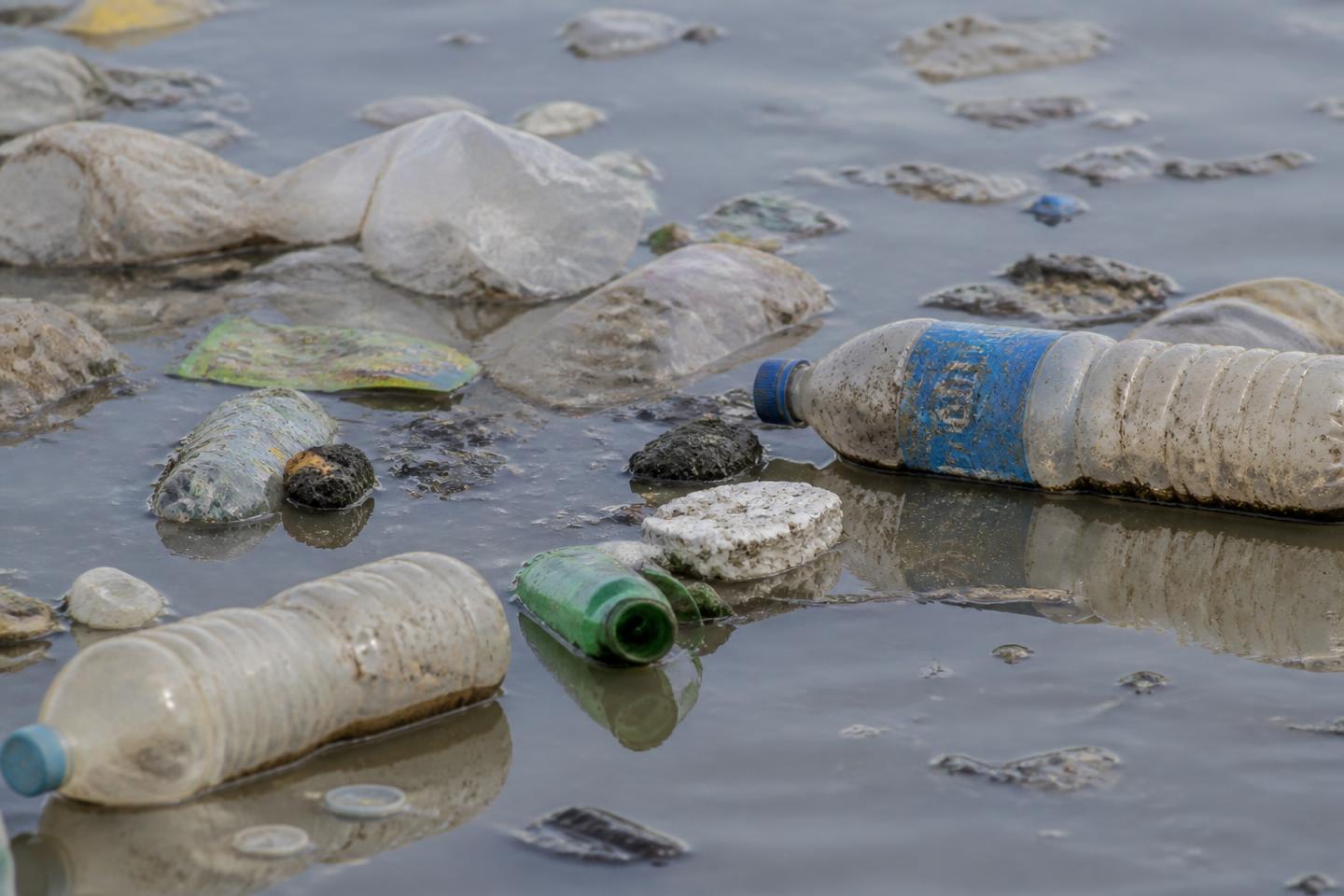
Plastic bottles and bags floating on polluted river water

Make it visible

See pollution in real time.

Our live map combines water quality readings from monitoring stations with trash hotspots reported by people on the ground. If you see waste, put it on the map.

Open the live map